
Article: Reishi Mushroom: A Guide to the ‘Queen of Mushrooms’
Reishi Mushroom: A Guide to the ‘Queen of Mushrooms’
Reishi is known as the ‘Queen of mushrooms’, a mushroom with a long documented history in Chinese and Japanese cultural tradition, historically prepared as a simmered tea or decoction.
Reishi mushrooms: background
Reishi is also known as Ganoderma lucidum, or G. lucidum in the scientific community, and as Lingzhi.
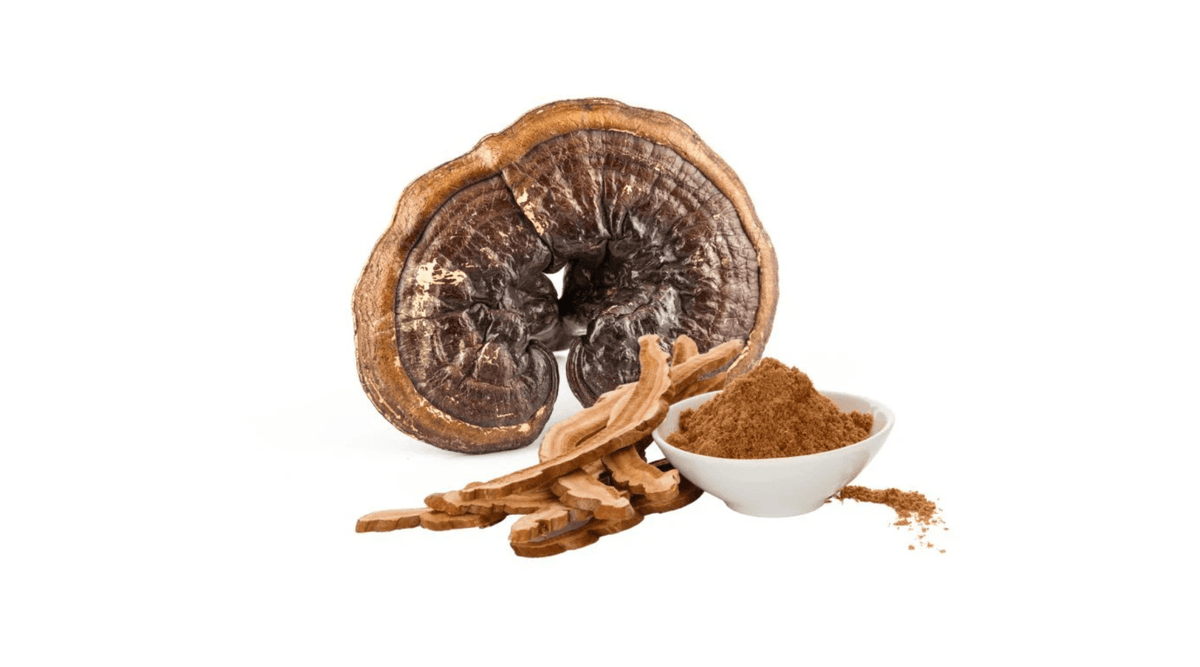
Reishi mushrooms are typically ear- or kidney-shaped with a distinctive rust colour (red, orange, and brown). Though they’re mostly grown commercially now, in the wild you would find them growing on hardwood trees like oak and maple. Reishi comes in various formats, from tea to tinctures, extract powders, capsules, and even food products. Most people prefer to take it as an extract or tea, as the fruiting body itself has a woody texture and bitter taste.

The compounds Reishi naturally contains
Reishi naturally contains a number of compounds. Chief among these are its triterpenoids — a group that includes triterpenes such as the ganoderic acids — and its polysaccharides, including beta-glucans. These are named here simply as compounds that occur naturally in the fruiting body; they are described here only as naturally occurring parts of the fruiting body.

A closer look at Reishi’s compounds
The triterpenes and polysaccharides in Reishi are what give the extract its characteristic bitter, woody character.
Adding Reishi to your daily routine
Reishi’s bitter, woody flavour means most people prefer it as an extract rather than eaten whole, which is why ours comes in capsules: take 3 capsules once or twice a day, with water, with or without food.

Food supplements should be part of a varied, balanced diet and a healthy lifestyle, not a substitute for one.
If you are pregnant, breastfeeding, taking medication, or managing a health condition, consult a qualified healthcare professional before using supplements.
Shop our Reishi Mushroom Extract Capsules →
Or explore our full Reishi collection.
Written by Angela Totté, co-founder of Pure Fungi. Growing up in Japan, Angela developed a long-standing interest in food. She writes about mushrooms for Pure Fungi’s Mushroom Guides.
Leave a comment
This site is protected by hCaptcha and the hCaptcha Privacy Policy and Terms of Service apply.