

Article: Lion's Mane vs Reishi vs Chaga vs Snow Fungus: A UK Buyer's Guide
Lion's Mane vs Reishi vs Chaga vs Snow Fungus: A UK Buyer's Guide
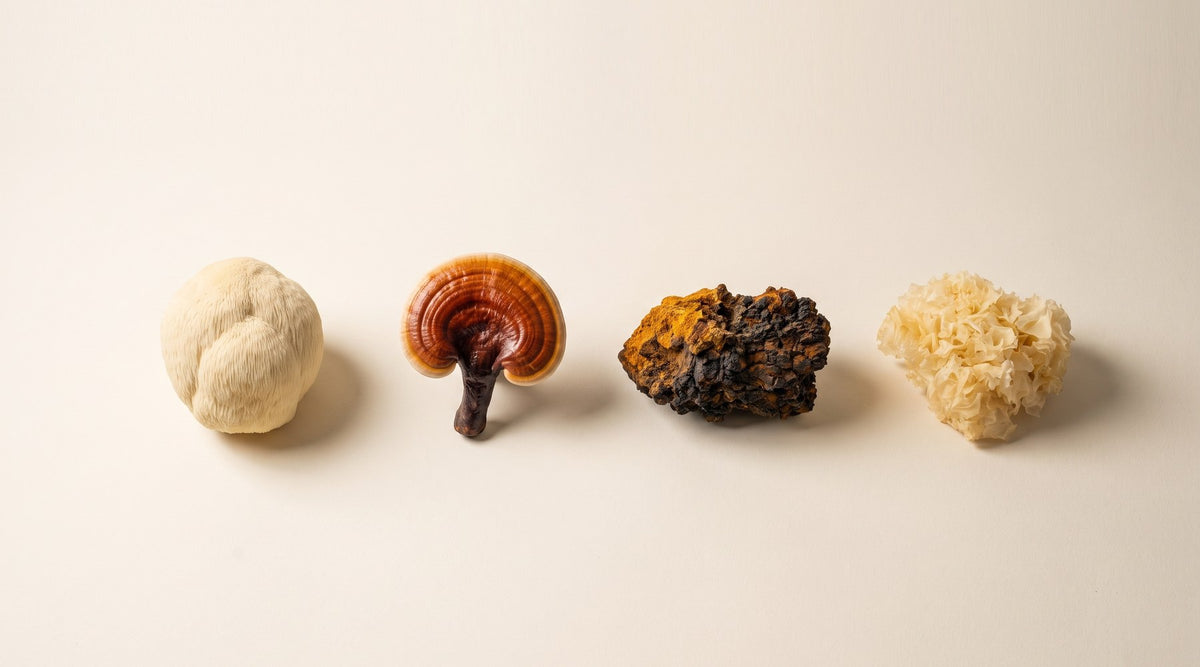
If you are choosing between Lion's Mane, Reishi, Chaga and Snow Fungus, the short answer is that they are four distinct mushrooms with different species, culinary heritages and characteristic compounds — so the "right" one depends on the traditional context, flavour and format you prefer rather than any single ranking. This guide compares the four mushrooms Pure Fungi offers so you can see, side by side, what each one is, how it has been cooked and brewed, the compounds it naturally contains, and the forms it comes in.
Below we look at each in turn, then bring it together in a comparison table and a short FAQ.
Lion's Mane (Hericium erinaceus)
Lion's Mane is a distinctive, shaggy white mushroom that grows on hardwood trees across North America, Europe and Asia. Its cascading, icicle-like spines give it its name, and in the kitchen its fruiting body has long been prized for a soft texture often likened to seafood such as crab or lobster.
It has a long history of culinary use in East Asia. In terms of composition, Lion's Mane naturally contains beta-glucans and other polysaccharides, along with compounds known as hericenones and erinacines.
Explore the Lion's Mane collection, available as an extract powder or extract capsules.
Reishi (Ganoderma lucidum)
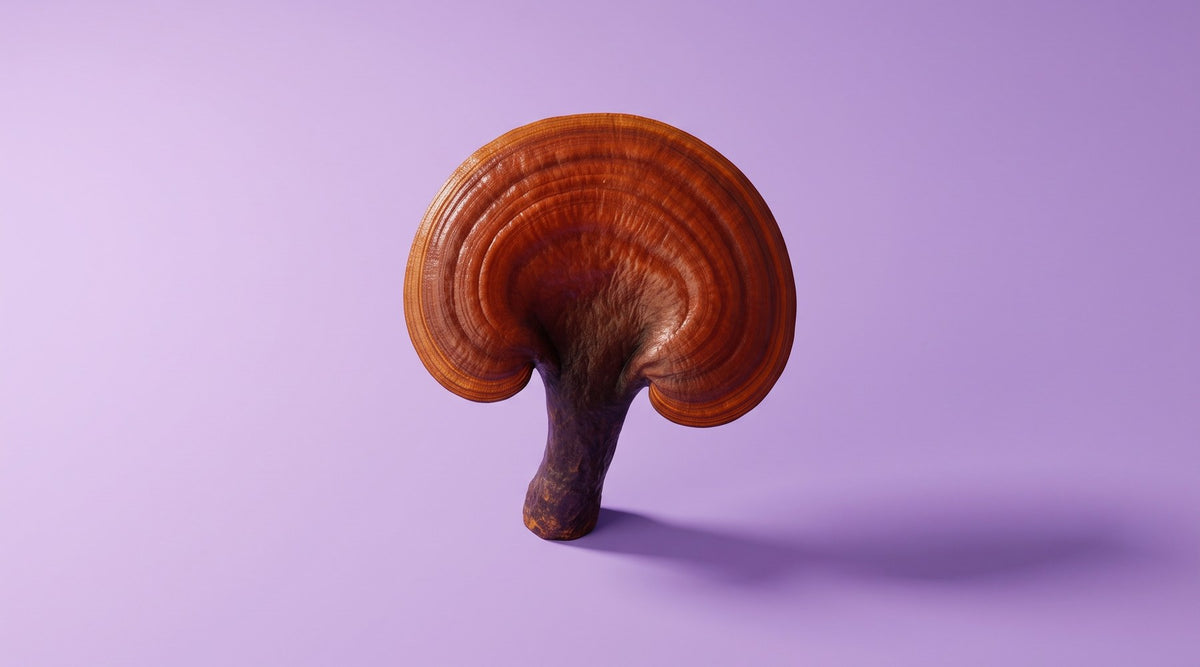
Reishi is a mushroom with a long documented history in Chinese and Japanese cultural tradition. Sometimes called the "queen of mushrooms", it is a woody, fan-shaped bracket fungus with a glossy, varnished surface. Because it is tough and bitter, Reishi has historically been simmered as a tea rather than eaten as food.
Its characteristic compounds include triterpenes (often referred to as ganoderic acids) alongside beta-glucans and other polysaccharides. The bitterness is associated with its triterpene content.
Browse the Reishi collection, available as extract capsules.
Chaga (Inonotus obliquus)
Affectionately known as the "king of mushrooms", Chaga grows on birch trees across the cold northern forests of the Northern Hemisphere, including Siberia, Northern Europe and Canada. Rather than a conventional cap-and-stem mushroom, it forms a dark, charcoal-like mass on the tree, with a golden-brown interior.
It has traditionally been ground and brewed as a drink in Siberia and northern Europe. Chaga naturally contains beta-glucans and other polysaccharides, along with triterpenes and the pigment melanin that gives it its dark colour. It is a birch-grown fungus, and provenance from cold northern forests is part of its heritage.
See the Chaga collection, available as an extract powder or extract capsules.
Snow Fungus (Tremella fuciformis)
Snow Fungus is a white, gelatinous mushroom found across Asia and the Americas, also known as the silver ear mushroom. Unlike the others, it has a long and continuing place in the kitchen: in Chinese cuisine it is a classic ingredient in sweet dessert soups, where its translucent, frilly fruiting body softens into a delicate, jelly-like texture.
Its defining feature is a high content of polysaccharides, and it is these gel-forming polysaccharides that give the cooked mushroom its characteristic mouthfeel. It has been traditionally used in Asian cuisine for generations and remains a familiar culinary ingredient today.
Discover the Snow Fungus collection, available as an extract powder or extract capsules.
Comparison table
| Mushroom | Culinary and heritage context | Key compounds (naturally occurring) | Forms available |
|---|---|---|---|
|
Lion's Mane (Hericium erinaceus) |
Long history of culinary use in East Asia; fruiting body used in cooking for its seafood-like texture | Beta-glucans and other polysaccharides; hericenones and erinacines | Extract powder, extract capsules |
|
Reishi (Ganoderma lucidum) |
Long documented history in Chinese and Japanese cultural tradition; historically simmered as a tea rather than eaten | Triterpenes (ganoderic acids), beta-glucans and other polysaccharides | Extract capsules |
|
Chaga (Inonotus obliquus) |
Birch-grown fungus from cold northern forests; traditionally ground and brewed as a drink | Beta-glucans and other polysaccharides, triterpenes, melanin | Extract powder, extract capsules |
|
Snow Fungus (Tremella fuciformis) |
Classic ingredient in Chinese cuisine, especially sweet dessert soups; still widely used in cooking | Gel-forming polysaccharides | Extract powder, extract capsules |
How to choose a format
Powders and capsules contain the same style of extract; the difference is practical. A powder can be stirred into coffee, tea, smoothies or recipes, which suits people who want to fold it into drinks or cooking, a natural fit for the culinary-leaning Snow Fungus. Capsules are pre-measured and portable, which many people find simpler for a consistent daily routine. Snow Fungus, Lion's Mane and Chaga are offered in both formats, while Reishi is currently offered as capsules.
FAQ
What does "functional mushroom" mean?
"Functional mushroom" is a common umbrella term for edible and traditionally used fungi — such as Lion's Mane, Reishi, Chaga and Snow Fungus — that are taken as food supplements or used in cooking, as distinct from the button and portobello mushrooms found in most supermarkets. It describes the category, not a health outcome.
Should I choose powder or capsules?
It comes down to preference. Powders are versatile for adding to drinks, smoothies and recipes, while capsules are pre-measured and convenient to carry. Lion's Mane, Chaga and Snow Fungus are available in both; Reishi is currently available as capsules.
Can I use more than one of these mushrooms?
Many people enjoy more than one, choosing between them based on flavour, culinary use and the traditional context that appeals to them. Each of our collection pages lists the available formats so you can compare and decide what fits your routine.
Why isn't Cordyceps in this comparison?
This guide covers the four mushrooms currently available from Pure Fungi — Lion's Mane, Reishi, Chaga and Snow Fungus. You can always browse the full range across our collection pages.
Food supplements should be part of a varied, balanced diet and a healthy lifestyle, not a substitute for one. If you are pregnant, nursing or taking medication, speak to your healthcare practitioner before use.
Leave a comment
This site is protected by hCaptcha and the hCaptcha Privacy Policy and Terms of Service apply.